

01
Custom website development
Responsive product, service and content websites with clear information architecture, reusable components and editing workflows that fit your team.
WEB DEVELOPMENT / BUILT FOR REAL USE
We build responsive websites, custom web applications and internal tools around the work they need to do. Clear interfaces, well-defined APIs, accessible interactions and a codebase your team can keep improving—not a beautiful page that stops working after launch.
Choose a direction to see what we design and test before delivery.
A responsive product website with a structured content model and purposeful conversion paths.
THE WORK
Web development covers more than a homepage. We scope the smallest useful product, then select the architecture that makes sense for its users and maintenance.
Responsive product, service and content websites with clear information architecture, reusable components and editing workflows that fit your team.
Internal tools, customer portals, reporting interfaces and operational dashboards with data models, permissions and predictable states.
Fix issues, improve an existing site or scope a website redesign without assuming it needs a rebuild. We review code, performance and dependencies before changing what is live.
Task-focused browser extension development, forms and platform integrations that connect your website to the systems already used by your business.
MAINTAIN / REDESIGN / REBUILD
Website maintenance, redesign and a full rebuild solve different problems. We check the live site and its important user journeys before recommending an approach.
When the structure works, fix forms, update dependencies, address accessibility issues and improve performance. Ongoing website maintenance should prevent regressions, not create them.
When navigation or content makes visitors work too hard, improve the layout and user journeys. Keep working integrations, useful URLs and search signals wherever possible.
When the platform cannot support needed permissions, integrations or a complex web application, plan migration, redirects, data handling, rollback and acceptance tests first.
The starting point is a review of your current URL and constraints, not a blanket redesign recommendation.
Discuss your existing websiteWORK YOU CAN INSPECT
Examples from our own product and engineering work. They demonstrate interfaces, integration points and maintainable delivery—not manufactured client testimonials.
INTERACTIVE PRODUCT DEMO
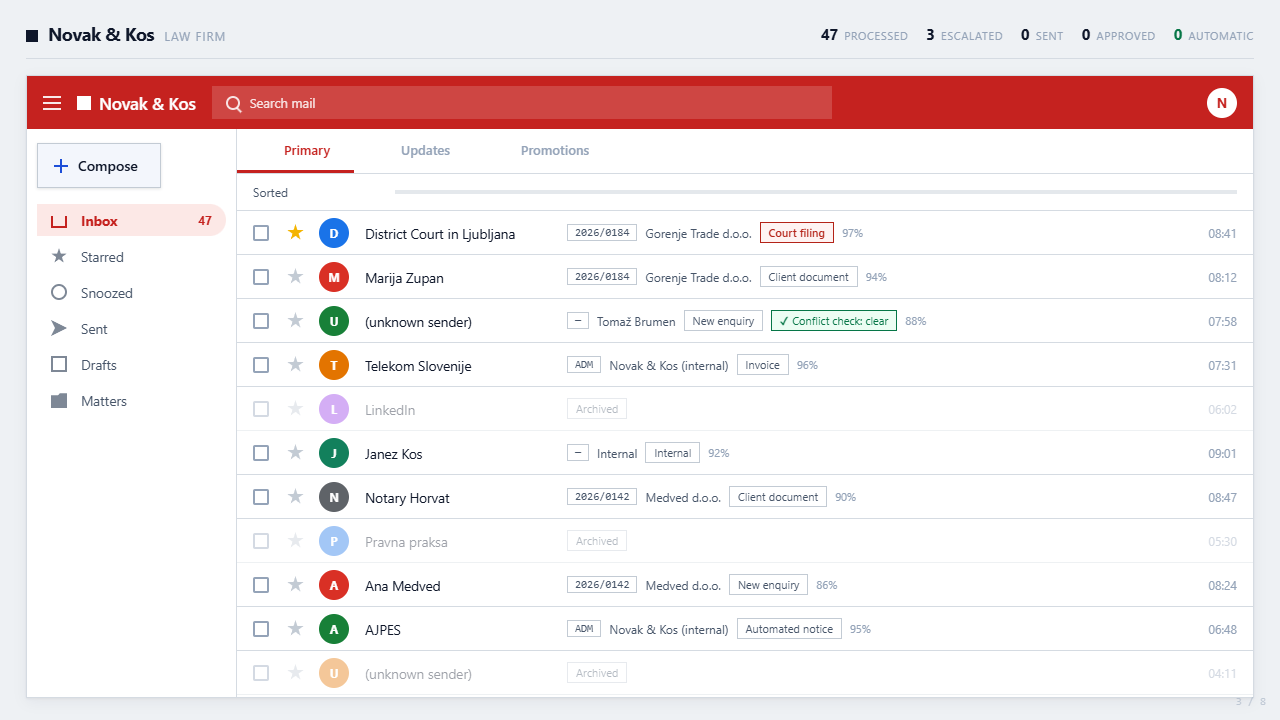
A localized product demonstration with interactive states and clear user flows. A useful example of designing an interface around a real task.
View projectPUBLIC PRODUCT
A multilingual SEO tooling product that connects content, diagnostic utilities and structured data workflows.
View project
PROJECT CASE STUDY
An operations-oriented dashboard project that explores how to make system status and controls easier to understand.
View projectThe examples represent different kinds of work; features or production status vary by project.
ENGINEERING QUALITY
A site has to work for people, browsers, search engines and the next developer. These are implementation priorities, not promises of perfect benchmark scores.
Semantic HTML, keyboard navigation, meaningful focus states, labels and contrast. We scope manual and automated checks against WCAG 2.2 where appropriate.
We measure loading, responsiveness and layout stability. Lab tests guide fixes; field data is used when real-user measurements are available.
Readable URLs, crawlable content, canonical links, metadata, structured information and sensible internal navigation built into the templates.
Input validation, clear loading and error states, API boundaries and tests for critical flows—not only a successful demo.
Authentication and authorization where needed, appropriate permissions, safe secrets management and review of dependencies and hosting settings.
Versioned code, deployment notes, useful tests and a clear record of what is included, what was verified and what remains outside scope.
Accessibility conformance and Core Web Vitals performance depend on the complete product and testing scope; we do not sell a badge or guarantee a score.
HOW WE BUILD
Whether it is a new web application or an existing-site repair, every milestone should be possible to review and verify.
Understand the users, core journeys, constraints and current systems. Agree what success looks like before choosing a framework.
Map information, interactions and data requirements. Review responsive flows and accessibility early, before implementation costs rise.
Implement with reviews, typed interfaces where useful and checks for empty, invalid and failed states. Connect the APIs that are actually needed.
Verify key journeys, agree a deployment and rollback path, then hand over documented source and the next set of priorities.
TOOLS, NOT RELIGION
Examples of technology used across our work. A marketing site does not need the same setup as a permissions-heavy operations dashboard.
Existing platforms are assessed before recommending replacement. We do not add a framework, database or hosting bill without a reason.
WHAT THE HANDOVER INCLUDES
A deliverable is complete when your team knows how to use it, change it and recover when something fails.
The agreed pages or application features, documented architecture and repository history.
Responsive and interaction checks, critical-path tests, and a record of known limitations or follow-up work.
Deployment guidance, environment configuration expectations and ownership of updates or support.
COMMON QUESTIONS
A practical view of scope, existing websites, frameworks, accessibility, pricing and life after launch.
A website mainly publishes information and helps visitors complete journeys such as finding services or sending an enquiry. A web application includes ongoing interactions, accounts, data or business actions such as dashboards and portals. We choose the simplest architecture that supports the actual requirements, not the biggest technology stack.
Yes. We begin by reviewing the existing code, platform, important user journeys and deployment process. A targeted fix or feature may be more sensible than a redesign. If a rebuild is justified by technical limitations, we explain the trade-offs and migration risks before work begins.
Our work commonly uses Astro, React, Remix, TypeScript, Node.js, SQL and Cloudflare, depending on the project. We can integrate with existing APIs and services, but we do not force a particular framework onto every website. Hosting, editing needs, access controls and long-term maintenance determine the fit.
Responsive layouts, semantic structure, visible keyboard focus, readable forms and accessible interaction patterns are included in our implementation approach. When formal WCAG 2.2 AA conformance is required, we define a testing scope with manual and automated checks; no single tool scan can certify an entire website.
We plan crawlable content, useful page titles, canonical URLs, internal links and performance-conscious implementation. We use lab measurements to diagnose changes and look at real-user LCP, INP and CLS data when available. Search rankings and guaranteed performance scores are not deliverables we can promise.
We specify hosting, deployment access, documentation and maintenance responsibilities during scoping. The code and handover notes make it possible for your team to keep operating the product. Ongoing monitoring, monthly changes and support windows are agreed separately rather than assumed.
We start from the pages, user journeys, permissions, integrations and quality checks required. A small website update and a full authenticated dashboard have very different scopes. After reviewing a concrete brief, we can propose phases and acceptance criteria instead of quoting a misleading one-size-fits-all price.
Yes, integration work can be scoped alongside the website or app, using the relevant APIs, webhooks and authentication mechanisms. The exact platform capabilities and permissions must be verified first. More complex data synchronization can be handled as a separate API and webhook integration engagement.
START WITH THE REAL PROBLEM
Share the current URL or the product idea, the people who will use it and the one action that matters most. We will propose a practical scope, technology fit and acceptance checks before implementation.